













An AI agent is a system where a language model doesn't just respond but uses tools to look up information and take actions in other systems, such as checking a calendar, booking an appointment or updating a CRM record. In business settings, agents should run with limited permissions, log every action and let a person take over at any time.
A one-sentence definition
An AI agent combines a language model (which understands and writes text) with tools: functions it can call to read data or do something in the real world.
Chatbot vs assistant vs agent
- Rule-based chatbot: follows a fixed script. Breaks on anything unexpected.
- AI assistant: understands natural language and answers from information it's given. It talks, but doesn't act.
- AI agent: understands, decides which tool to use and takes action.
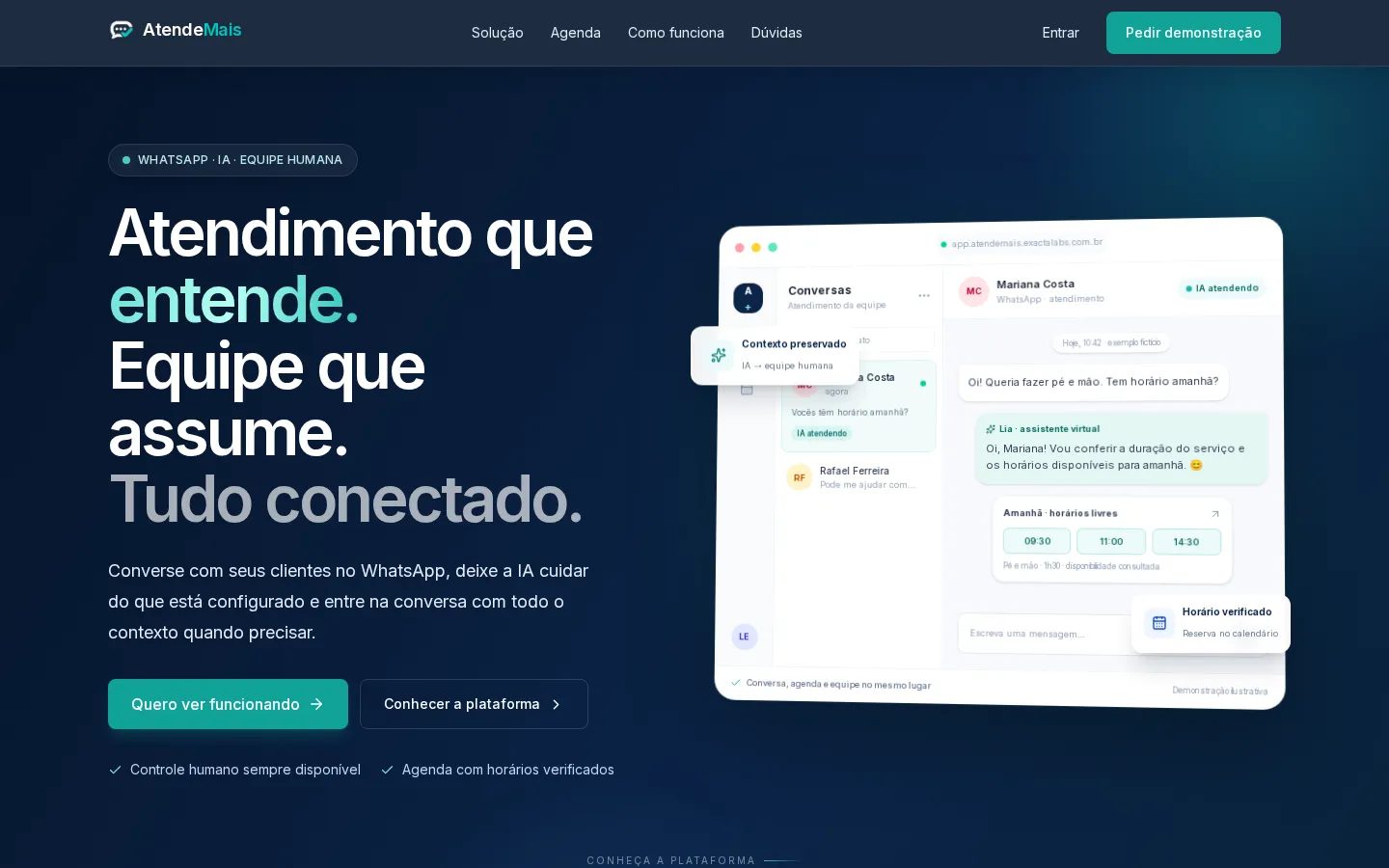
Example: a customer asks "any slots tomorrow afternoon?". An assistant says "we have afternoon availability, want to book?". An agent checks the real calendar, offers 2:00 and 4:30, holds the slot while the customer decides, and confirms the booking.
How an agent works
- Receives a message.
- Decides whether it needs a tool (for example, "check availability").
- Calls the tool with the right parameters.
- Reads the result and decides the next step.
- Replies or completes the action.
The agent can only do what its tools allow. Tool design is the main safety mechanism.
Business examples
- Scheduling: find slots, hold, confirm, remind.
- Order status: look up an order and explain where it is.
- CRM hygiene: log conversation summaries and next steps.
- Triage: classify requests and open tickets for the right team.
- Document intake: extract fields and prepare records for human review.
Running agents safely
- Least privilege: if it only needs to book, it shouldn't be able to cancel or change prices.
- Confirmation: important actions require the customer's or a staff member's "yes".
- Logging: every tool call and result is recorded.
- Human takeover: your team can step in and the agent pauses in that conversation.
- Prompt injection resistance: treat user messages as data, not instructions; tool permissions block out-of-scope actions regardless of what someone types.
Will agents replace staff?
Agents work best on repetitive, rule-based, low-risk tasks. Decisions, exceptions and relationships stay with people.
Where to start
Pick one job for the agent and one metric. See AI agents for business and AI for small businesses.