














AI improves operations by taking over high-volume, text-heavy work: answering routine customer questions, triaging requests, extracting data from documents, coordinating scheduling, summarizing activity into reports and making internal knowledge searchable. The gains come from pairing AI with approved data, clear limits, logging and human oversight, and from measuring before and after.
Where operations lose time
Look for work that is frequent, text-based and rule-guided: answering the same questions, reading documents to copy a few fields, routing requests, compiling reports. That's where AI delivers measurable gains.
Use cases
Customer support
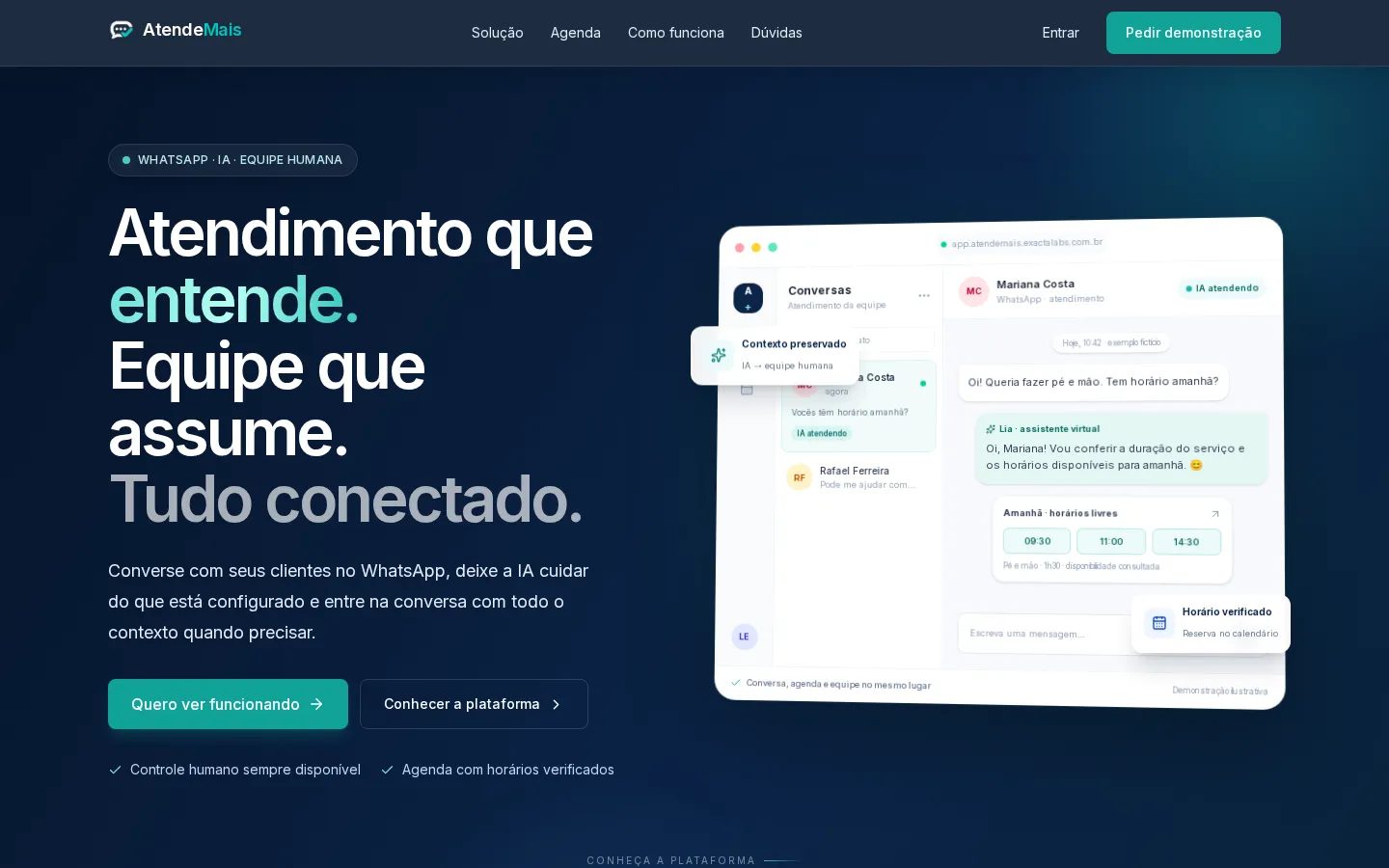
An assistant answers routine questions from approved content, checks order or appointment status, and escalates with a summary.
Triage and routing
Incoming emails and messages are classified (quote, complaint, cancellation) and routed with key fields extracted.
Document processing
Invoices, contracts and forms are read, fields extracted and records prepared for human review.
Scheduling
An agent offers real availability, holds slots and sends confirmations and reminders.
Reporting
Weekly summaries in plain language from sales, support and operational data.
Internal knowledge
Staff ask "how do we handle a late check-in?" and get an answer with a link to the source procedure. Great for seasonal or new staff.
Guardrails that make it work
- Approved knowledge only for customer-facing answers.
- Written limits on actions.
- Logs of every answer and action.
- Human handoff on demand.
- Data minimization for privacy.
Measuring impact
Pick one metric per use case: first-response time, hours saved, error rate, no-show rate. Measure before, pilot, measure after.
A realistic rollout
- Pick one use case with clear volume.
- Organize the data it needs.
- Pilot with a narrow scope.
- Review conversations and logs weekly.
- Expand only with results.
See AI solutions for business and business process automation, explained.